Das ultimative 137-Prepositionen-Handbuch 📚
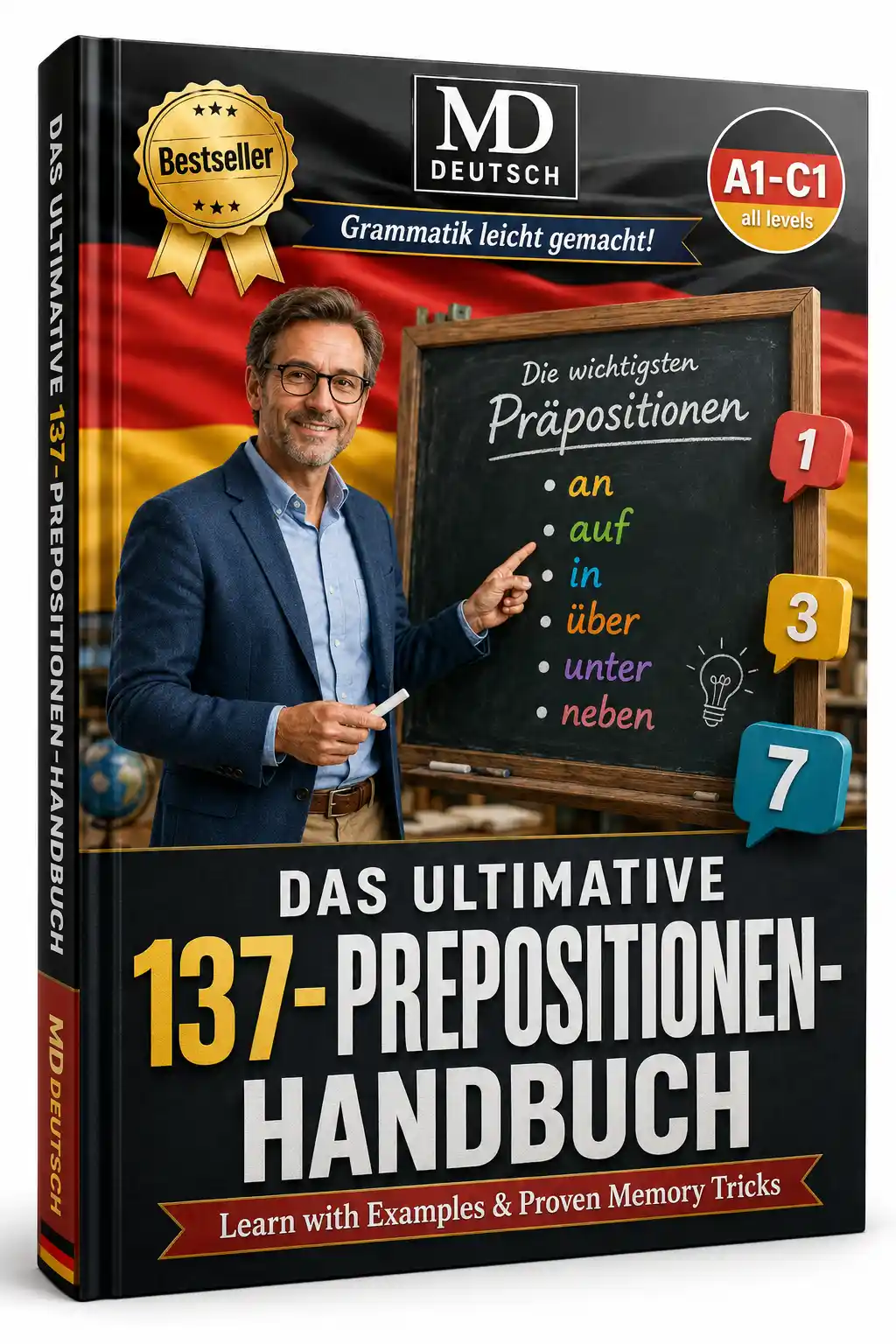
Das ultimative 137-Prepositionen-Handbuch is a useful German learning resource for students who want to understand and use German prepositions more accurately. Prepositions are small words, but they play an important role in German sentence structure. They can determine which case is required and often change the meaning of a sentence depending on how they are used.
Why German Prepositions Matter
German learners frequently find prepositions challenging because they do not always correspond directly to English equivalents. Words such as an, auf, in, mit, nach, von, für, and über can have different meanings depending on the context. Some prepositions require the accusative case, others require the dative, while certain two-way prepositions can be used with either accusative or dative.
The Das ultimative 137-Prepositionen-Handbuch can help learners organize this important area of German grammar. Instead of studying prepositions as isolated vocabulary, learners can examine their meanings, grammatical requirements, and use in complete sentences.
Learn Prepositions in Context
Memorizing a long list of prepositions is not always enough. The most effective approach is to see each preposition in realistic examples. For instance, learners can compare sentences that describe location with sentences that describe movement. This helps them understand why a particular case is used.
The Das ultimative 137-Prepositionen-Handbuch can be particularly helpful for students working toward intermediate and advanced German levels. A systematic reference can make it easier to review difficult prepositions and identify common patterns.
When studying, pay attention to the question being answered. For example, Wo? often relates to location, while Wohin? can indicate movement toward a destination. Recognizing these patterns can make two-way prepositions much easier to understand.
Improve Grammar and Writing Accuracy
Prepositions appear constantly in German communication. They are used when talking about time, places, people, transportation, relationships, causes, purposes, and many other topics. Using the wrong preposition or case can make an otherwise correct sentence sound unnatural.
The Das ultimative 137-Prepositionen-Handbuch can therefore support learners who want to improve their grammar accuracy for everyday communication, school, work, or German language examinations. It can also be used alongside grammar workbooks, vocabulary resources, and writing exercises.
A good study method is to keep a personal list of prepositions that you frequently confuse. Write several example sentences for each one and review them regularly. This turns grammar knowledge into practical language skills.
Build Confidence with Regular Practice
German grammar becomes easier when difficult topics are studied in small, regular sessions. Rather than trying to memorize everything at once, focus on a few prepositions, practice them in sentences, and then gradually expand your knowledge.
For learners looking for a focused reference to German prepositions, Das ultimative 137-Prepositionen-Handbuch can be a valuable addition to a structured study routine. With consistent practice, you can improve sentence construction, reduce common grammar mistakes, and communicate more naturally in German.