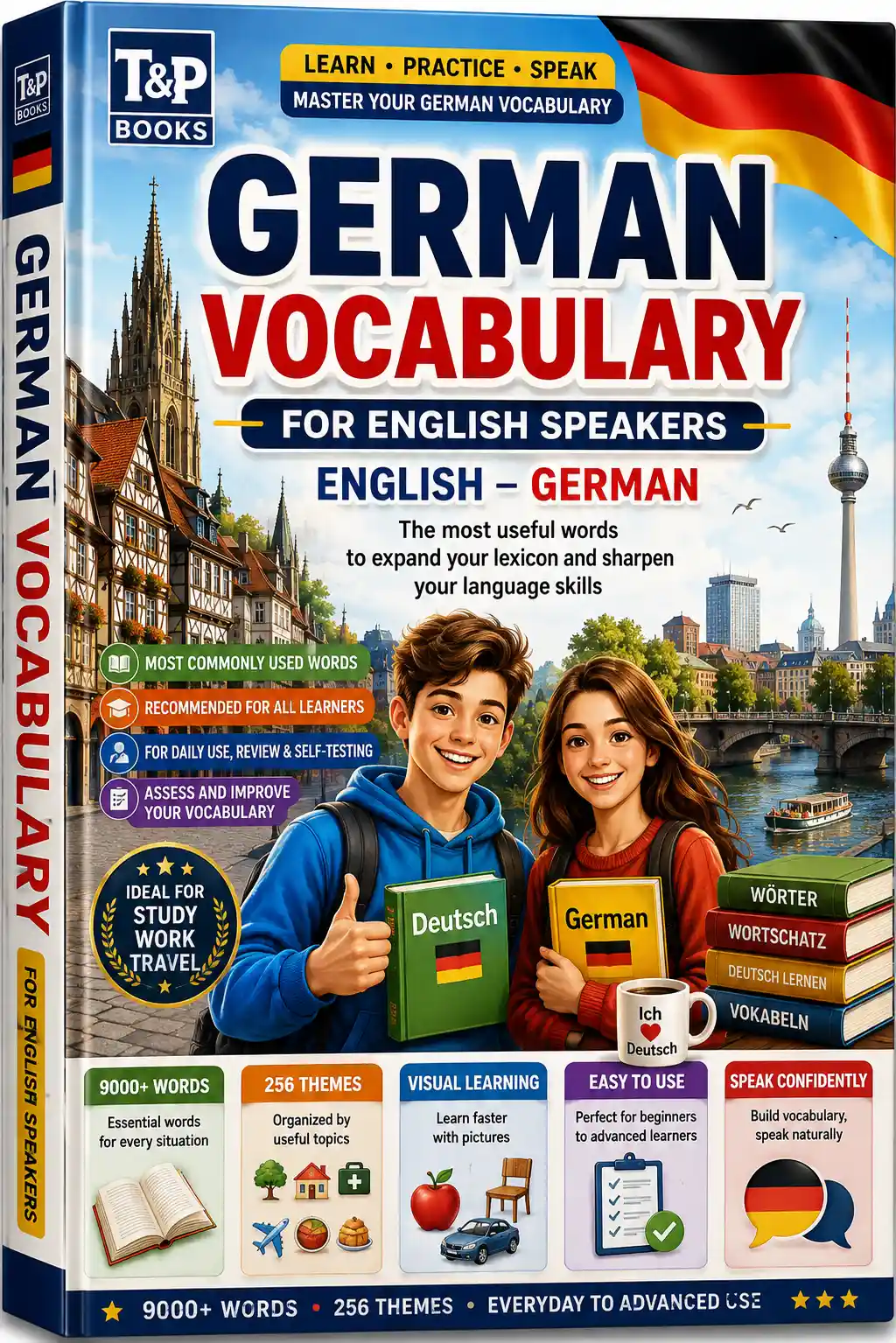
German Vocabulary for English Speakers – 9000 Words 📚 – A Complete Guide to Building German Vocabulary
German Vocabulary for English Speakers – 9000 Words 📚 can be a valuable resource for learners who want to expand their German vocabulary in a structured and practical way. Building a strong vocabulary is one of the most important steps toward understanding conversations, reading German texts, writing clearly, and speaking with confidence.
Why Is German Vocabulary Important?
Vocabulary is the foundation of communication. Even with basic grammar knowledge, it can be difficult to express ideas when you do not know enough words. English speakers learning German have an advantage in some areas because English and German share several related words and linguistic roots.
A large vocabulary resource can help learners gradually discover words for everyday conversations, education, work, travel, hobbies, and social situations.
Learn Words in Useful Categories
German Vocabulary for English Speakers – 9000 Words 📚 can be most effective when vocabulary is studied by topic rather than as one enormous list. Organize words into categories such as family, food, home, transportation, health, school, business, technology, nature, and travel.
For example, while studying travel vocabulary, learners can practice words such as der Bahnhof (train station), der Flughafen (airport), das Ticket (ticket), and der Koffer (suitcase). Learning related words together makes it easier to remember and use them in context.
Remember German Nouns With Articles
One important difference for English speakers is that German nouns have grammatical genders. German commonly uses der, die, and das as definite articles.
Instead of learning a noun by itself, memorize it together with its article. For example, learn der Tisch rather than simply Tisch. This habit can make German grammar easier as you progress to more advanced topics.
Use Vocabulary in Sentences
Memorizing individual words is useful, but using them in sentences is even more effective. When you learn a new German word, create a simple sentence with it.
For example, after learning das Buch, practice “Ich lese ein Buch.” This helps you learn vocabulary while also becoming familiar with German sentence structure.
Review Words Regularly
The German Vocabulary for English Speakers – 9000 Words 📚 approach works best when learners review vocabulary consistently. Use flashcards, short quizzes, writing exercises, or spaced repetition to revisit previously learned words.
Try learning a manageable number of new words each day rather than attempting to memorize hundreds at once. Regular review helps move vocabulary into long-term memory.
Who Can Benefit From This Resource?
German Vocabulary for English Speakers – 9000 Words 📚 can be useful for beginners, intermediate students, travelers, self-learners, and English speakers preparing for German courses or exams. It can also complement grammar books, language apps, classroom lessons, and conversation practice.
Final Thoughts
Expanding your German vocabulary takes patience and regular practice. German Vocabulary for English Speakers – 9000 Words 📚 can provide a broad vocabulary foundation while helping learners discover useful words for everyday communication. By studying vocabulary by topic, learning nouns with their articles, creating sentences, and reviewing regularly, English speakers can gradually develop stronger German language skills and greater confidence.